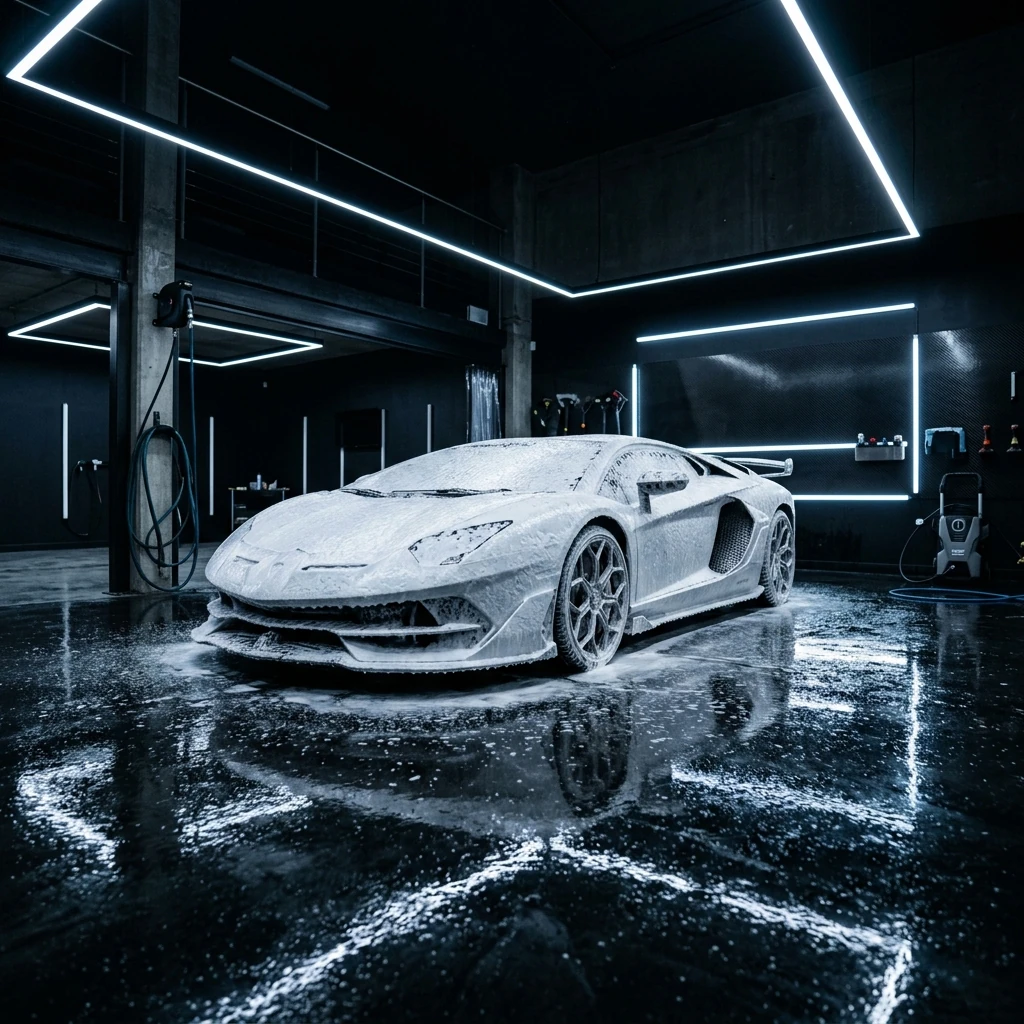
Hold a torch to dark paint at night and you will see a web of fine circular scratches. Almost none of that came from the road. It came from washing.
How the damage happens
A brush-based wash carries grit from every vehicle that went through before yours. Even touchless systems rely on aggressive chemistry that strips protection over time. Both drag contamination across the clear coat under pressure, and each pass adds scratches too fine to see individually but obvious in the aggregate.
What it costs
Correcting swirl marks means machine polishing away a controlled layer of clear coat. Clear coat is finite: a car can only be corrected a few times in its life. Weekly automatic washing spends that budget for no benefit.
What to do instead
Two buckets with grit guards, a pH-neutral shampoo and a clean microfibre mitt. Rinse thoroughly before touching the paint, work top down, and dry with a plush towel rather than letting it air dry. It takes twenty minutes longer and saves a correction bill.
If you have a coating, this matters more rather than less. The coating is doing the work of keeping dirt from bonding; wash technique is what keeps the coating alive.